Key takeaways
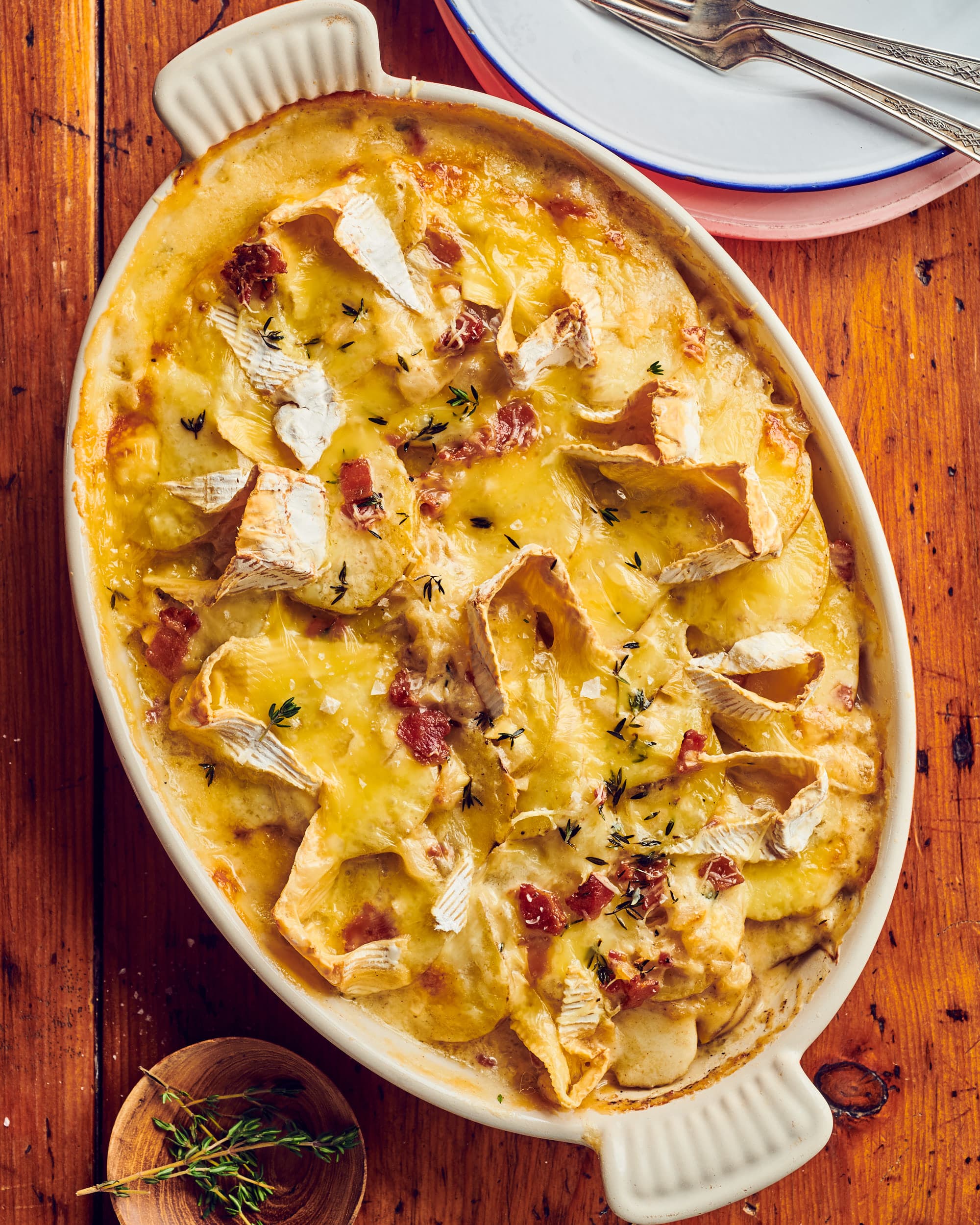
- Tartiflette is a baked dish from Savoy made of potatoes, lardons, onions, white wine, and a whole wheel of halved Reblochon cheese.
- Reblochon AOP is the essential ingredient; substituting standard brie or generic mountain cheese alters the earthy, washed-rind flavor profile entirely.
- Croziflette is a common variation that swaps sliced potatoes for crozets, small square buckwheat pasta native to the region.
- Authentic spots serve tartiflette piping hot in individual earthenware dishes with a simple green salad dressed in sharp vinaigrette to cut the fat.
Reblochon: The tax-evading cheese behind the dish
You cannot talk about tartiflette without talking about Reblochon. This soft, washed-rind cheese comes from the Thônes valley in Haute-Savoie, and its origins trace back to 13th-century French farmers trying to outsmart land inspectors.
Landowners charged farmers tax based on how many buckets of milk their cows produced each day. During inspection hours, farmers did not fully milk their herds. Once the tax collectors walked off, the cows were milked a second time. This late yield—called reblocher in the local dialect, meaning to squeeze a cow's udder again—was richer, higher in butterfat, and perfect for cheesemaking.
That rich milk yields a cheese with a supple, ivory paste beneath a thin, yellowish-orange crust washed with brine. When heated, Reblochon does not pull into long, elastic strings like mozzarella; instead, it melts into a velvety cream that smells of damp cellars and toasted hazelnuts.
Anatomy of a classic Savoyard bake
Despite its rich reputation, traditional tartiflette relies on a short list of humble winter mountain ingredients assembled with care.
First come firm, waxy potatoes like Charlotte or Amandine. They are boiled until barely tender, sliced thick, and layered into a shallow baking vessel. Thick-cut smoked pork lardons are fried alongside finely diced yellow onions until the pork releases its fat and the onions turn golden and sweet.
A splash of dry Savoy white wine—usually Jacquère or Roussette—deglazes the skillet, scraping up every brown bit of pork scrap before the mixture spills over the potatoes. Finally, a wheel of fresh Reblochon is sliced horizontally through its equator. Both halves are laid skin-side up over the dish, blanketing the potatoes entirely.
In the oven, the underside of the cheese melts into the warm potatoes while the rind blisters under the heat, forming a crisp, savory crust that holds the moisture inside.
Reading the menu: Tartiflette vs. Croziflette
Scanning a chalet menu along the pistes often reveals several variations of this mountain classic. The most frequent counterpart is croziflette.
Instead of sliced potatoes, croziflette uses crozets, small, flat squares of pasta traditionally made from buckwheat flour. Originating in the Tarentaise Valley, these tiny pasta bites absorb the melted cheese and wine pan juices differently than potatoes, yielding a denser, toothsome texture similar to a baked macaroni.
You might also spot Péela on older regional menus. This is the historical rustic ancestor of tartiflette, traditionally cooked in a long-handled skillet over an open hearth fire using leftover potatoes and whatever farm cheese was on hand.
If you are looking over an unfamiliar mountain menu written in dense regional script, scanning it with MenuDish lets you see matched dish photos and clear ingredient breakdowns so you can choose between classic potatoes or buckwheat pasta before placing your order.
How to spot authentic tartiflette in the wild
Not every pan of cheesy potatoes in the French Alps earns its keep. Tourist traps frequently cut corners by swapping real Reblochon for cheap pasteurized meltable cheeses or adding heavy cream to disguise dry potatoes.
Look closely at menu descriptions. True Savoyard spots explicitly mention Reblochon de Savoie AOP on their menus. The AOP status guarantees the cheese was produced locally using traditional methods from mountain cow herds.
When your order arrives, look at the top. You should clearly see the orange-pink rind of the cheese wheel sitting atop the gold bubbling surface. If the dish is covered in a uniform layer of yellow cheddar-like oil or swimming in fluid cream, you are eating a fast imitation rather than a classic bake.
A traditional serving comes piping hot in a stoneware dish, accompanied by a small green salad dressed in a punchy mustard vinaigrette. That acid is essential—it cleanses your palate between rich, savory bites of cheese and smoked pork.
Don't cook it — find it.
See every dish on any menu before you order. Scan, see the photo, check allergens & nutrition.
Allergens: Dairy, Pork, Sulfites. The MenuDish app flags these automatically for every dish it scans.