Key takeaways
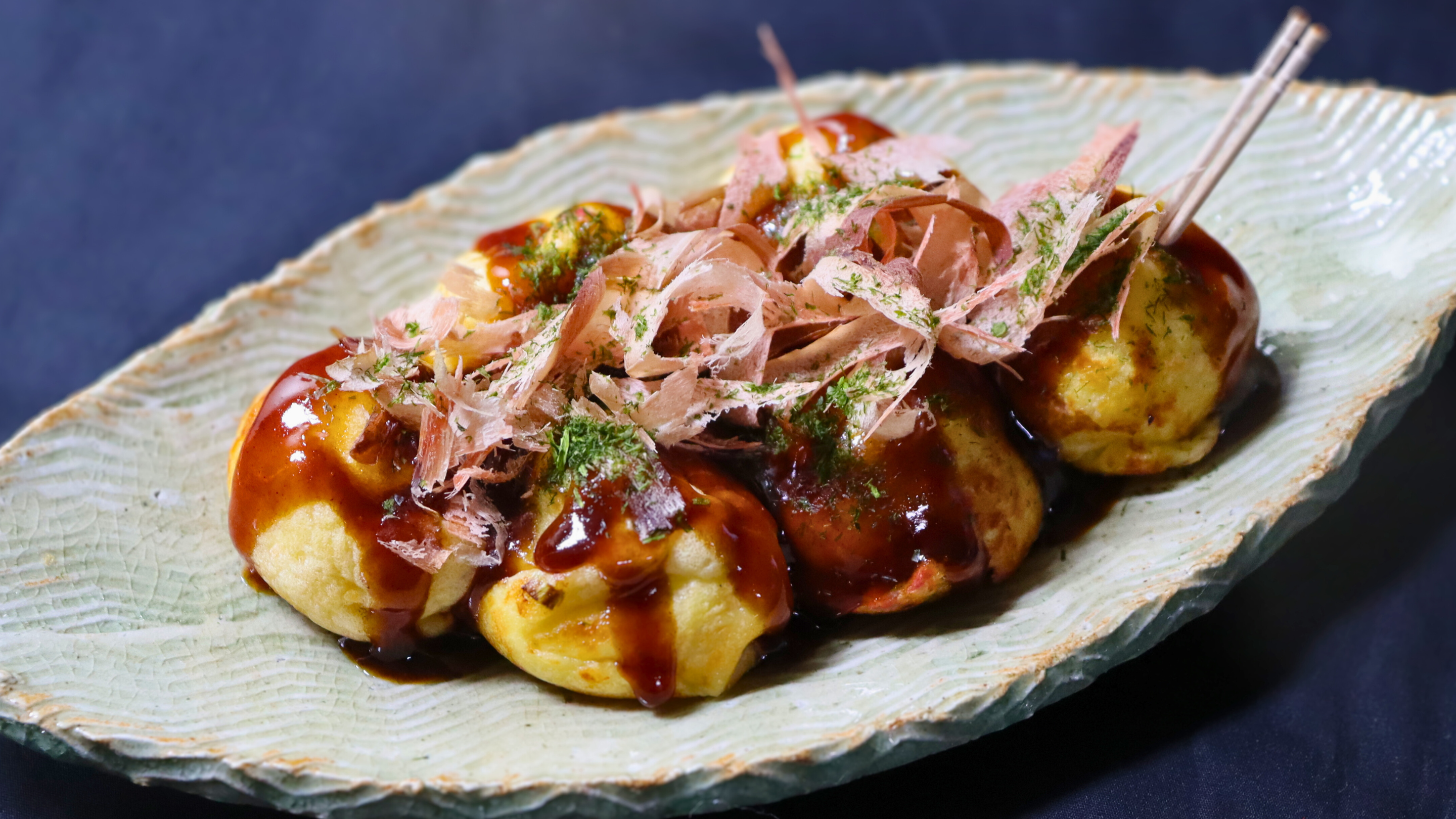
- Takoyaki are ball-shaped street food bites made from wheat flour batter, dashi, tender octopus, pickled ginger, and tempura scraps.
- The interior stays gooey and custardy while the outside forms a delicate, golden skin.
- Classic toppings include sweet takoyaki sauce, Japanese mayonnaise, green seaweed powder (aonori), and smoky bonito flakes.
- Poke a small hole in the outer shell and wait ninety seconds before eating to avoid burning your mouth.
What takoyaki actually is (and why the texture surprises people)
Takoyaki translates literally to octopus grilled or fried, but that name understates what happens inside the heavy iron pan. Originating in Osaka in the 1930s, these spherical bites start as a thin, dashi-rich wheat batter poured across recessed metal grids. The cook drops a chunk of boiled octopus (tako) into each mold, alongside chopped scallions, pickled pink ginger (beni shoga), and crunchy tempura batter scraps (tenkasu).
Using two thin metal skewers, the vendor turns the liquid batter with fast, practiced flicks of the wrist until round, golden spheres emerge. First-timers often expect a dense bread ball or a chewy meatball. Instead, a proper takoyaki has a paper-thin, crisp skin holding a soft, molten center that feels almost like savory custard wrapped around tender seafood.
Sauces, shavings, and the dancing bonito effect
Plain batter and octopus taste great on their own, but the finished dish depends on its rich toppings. Vendors brush the cooked balls with a thick, glossy brown sauce that resembles dark barbecue glaze—fruity, tangy, and spiked with soy sauce. A squeeze bottle adds fine ribbons of Japanese mayonnaise, which is richer than Western mayo because it relies entirely on egg yolks and rice vinegar.
To finish, the cook dusts the hot balls with fine green seaweed powder (aonori) and a handful of shaved dried bonito flakes (katsuobushi). The intense steam rising off the fresh batter makes the papery fish flakes curl and twitch. That hypnotic visual motion draws crowds to street corners across Japan every night.
Ponzu, cheese, and regional variations
While classic brown sauce and mayo dominate street carts, seated restaurants and night markets offer plenty of distinct styles. If heavy sweet glaze feels too rich on a warm summer evening, look for ponzu takoyaki, which swaps the heavy sauce for citrusy soy sauce, grated daikon radish, and fresh shiso leaves.
Other favorites include mentaiko cheese (spiced cod roe with melted mozzarella), coarse sea salt with sesame oil, or traditional Akashiyaki style, where plain, egg-rich balls come with a bowl of warm kelp broth for dipping. When you are standing in front of a busy stall trying to decipher five different topping combos, checking MenuDish helps you match the Japanese menu items to real dish photos so you know whether you are ordering sweet brown glaze or tangy citrus broth.
How to eat takoyaki like a local
The biggest mistake newcomers make with takoyaki is eating too fast. Because street vendors hand over the cardboard tray seconds after pulling the balls from a 400-degree iron plate, the crust traps scalding steam inside the molten center. Pop a whole sphere into your mouth immediately, and you will regret it.
Patience pays off here. Pick up a ball with your wooden toothpick and poke a small hole in the top shell to let the trapped steam vent out. Wait about a minute while the sauces sink into the crust. Once the center cools slightly, take a small half-bite or pop the entire ball into your mouth in one go.
Don't cook it — find it.
See every dish on any menu before you order. Scan, see the photo, check allergens & nutrition.
Allergens: Gluten, Eggs, Soy, Fish, Mollusks. The MenuDish app flags these automatically for every dish it scans.