Blog Dish guide What is Cachopo? Your Guide to Asturias' Crispy, Cheese-Stuffed Icon
Dish guide 🌐 Spanish

What is Cachopo? Your Guide to Asturias' Crispy, Cheese-Stuffed Icon

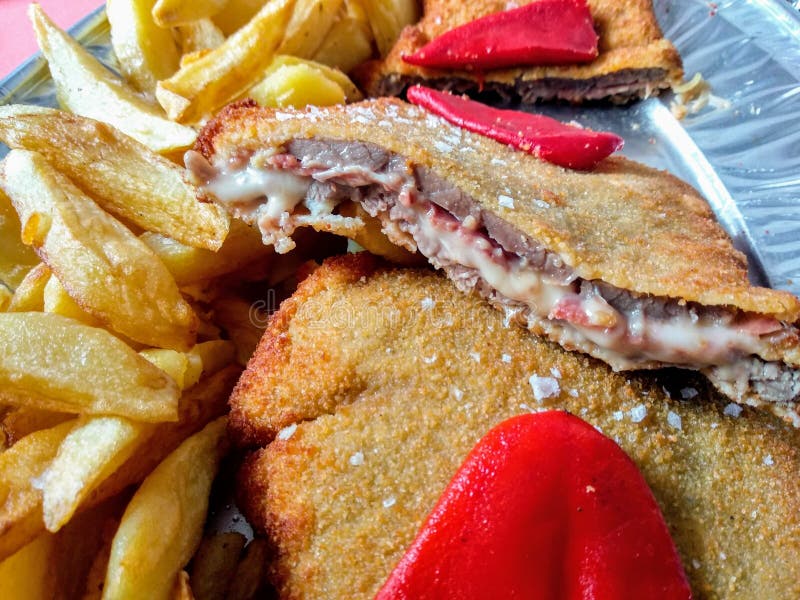
If you walk into a crowded sidrería in Oviedo and see a wooden platter carrying a cutlet the size of a hubcap, you are looking at cachopo. It looks like a schnitzel that spent a few months lifting heavy weights, but slicing into it reveals layers of savory jamón and melted mountain cheese.

What is Cachopo? Your Guide to Asturias' Crispy, Cheese-Stuffed Icon
What is Cachopo? Your Guide to Asturias' Crispy, Cheese-Stuffed Icon — Photo via MenuDish.

Key takeaways

  • Cachopo features two thin beef steaks layered around cured ham and melted cheese, breaded and deep-fried.
  • Portions are notoriously large, designed to be shared among two to four diners at a tavern table.
  • Traditional fillings use cured jamón serrano and sharp Asturian cheeses like Cabrales or Vidiago.
  • It is traditionally served alongside roasted red peppers, crisp French fries, and a bottle of dry Asturian cider.

The Anatomy of a Proper Cachopo

At its core, cachopo is a double beef cutlet stuffed with filling, lightly dredged in flour, dipped in beaten egg, covered in fine breadcrumbs, and fried until deep golden brown. The outer layer must crackle cleanly under the knife without sliding off the meat—a sign of proper breading technique.

Inside, beef cutlets cut from the top round or tender loin frame thin slices of dry-cured ham (jamón serrano or cecina) and regional cheese. As the stuffed meat sizzles in hot olive oil, the cheese liquifies into a creamy pool that binds the beef and cured pork together.

Cabrales vs. Smooth Cheeses: What Goes Inside

Traditionalists in northern Spain stick to classic combos: sweet serrano ham paired with melting cheeses like Central Lechera's mild varieties or aged Vidiago. However, many sidrerías now offer regional twists that completely change the flavor profile.

For a bold, pungent bite, order a cachopo filled with Cabrales—the legendary Asturian blue cheese aged in limestone caves. If you prefer a leaner, smokier cut, look for fillings made with cecina de León (cured beef) paired with creamy goat cheese or caramelized onions.

How to Order Cachopo Without Over-Ordering

One mistake almost every visitor makes is ordering a full cachopo per person. Unless you are entering a competitive eating trial, a single dish is meant to feed two to three adults comfortably. Tables typically share one cutlet along with a skillet of Padrón peppers or fresh seafood to start.

When deciphering sidrería menus with endless filling variations, opening MenuDish helps you scan the Spanish descriptions to see real dish photos of the exact meat cuts, cheeses, and portion sizes matched from restaurant menus before you lock in your order.

Why Dry Cider Is Non-Negotiable

You cannot talk about cachopo without mentioning sidra natural. Asturian cider is completely dry, cloudy, flat, and noticeably tart. It cuts straight through the heavy grease and melted cheese of the breaded cutlet, refreshing your palate between bites.

Servers pour sidra from high above their heads into a wide tumbler tilted at an angle—a technique called escanciar—to instantly introduce fizz into the still beverage. Drink each small pour in a single swallow right away while the bubbles last.

Don't cook it — find it.

See every dish on any menu before you order. Scan, see the photo, check allergens & nutrition.

🌱

Allergens: Gluten, Dairy, Egg. The MenuDish app flags these automatically for every dish it scans.
Frequently asked questions

What meat is used in cachopo?
Authentic cachopo is made using two thin, well-pounded beef cutlets, usually sliced from the top round, rump, or sirloin of Asturian veal.
What is the difference between cachopo and schnitzel?
While schnitzel is a single flattened cutlet, cachopo is a sandwich made of two beef cutlets filled with ham and cheese before being breaded and fried.
Is cachopo served hot or cold?
Cachopo is served piping hot straight out of the fryer so the breading stays extra crisp and the cheese inside remains melted.

Keep reading

Related dish guides

What is Culurgiones? Your Guide to Sardinia's Braided Potato Dumpling
Dish guide Veg 6 min

What is Culurgiones? Your Guide to Sardinia's Braided Potato Dumpling

You sit down at a rustic trattoria in Ogliastra, open the hand-written menu, and spot a word that looks almost unpronounceable: Culurgiones. Minutes later, a plate arrives bearing six plump, pillow-like pasta pockets, each sealed with an intricate wheat-ear braid down its center. Cut into one, and you don't find meat or ricotta—instead, a velvety filling of potato, aged Pecorino Sardo, garlic, and fresh mint spills onto the plate.

Read more
What is a Tamale? Your Guide to Mesoamerica's Steamed Masa Pocket
Dish guide 6 min

What is a Tamale? Your Guide to Mesoamerica's Steamed Masa Pocket

Unwrapping a tamale is a tiny ritual. You peel back a hot, steamed corn husk to reveal a fragrant block of golden corn dough that yields easily under a fork.

Read more
What is Flammkuchen? Your Guide to Alsace's Crispy Flatbread
Dish guide 6 min

What is Flammkuchen? Your Guide to Alsace's Crispy Flatbread

You sit down at a wooden table in Strasbourg, surrounded by timbered walls and chalkboards listing items in a dialect that feels half-French and half-German. A rectangular wooden board hits the next table, carrying a parchment-thin crust topped with sizzled bacon bits and sweet melted onions, blistering at the edges. That is Flammkuchen—or tarte flambée—and it is one of eastern France's greatest tavern foods.

Read more

Ready to order smarter?

Never order a mystery dish again.

Scan the menu, see real photos for every dish, and check ingredients, allergens and nutrition — all in a couple of seconds.

What is Cachopo? Your Guide to Asturias' Crispy, Cheese-Stuffed Icon in the MenuDish app
What is Cachopo? Your Guide to Asturias' Crispy, Cheese-Stuffed Icon