Key takeaways
- Bunny chow is a Durban street food made by filling a hollowed-out white bread loaf with rich, spicy meat or bean curry.
- It originated among Indian South Africans in Durban during the mid-20th century as a portable takeout meal.
- You eat a bunny chow entirely with your hands, using the bread top and outer walls to scoop up curry and gravy.
- Common options include mutton, chicken, beef, or sugar bean curry, served with a side of fresh carrot sambal.
A Durban original born out of necessity
Bunny chow emerged from Durban's Indian community in the 1940s. Contract laborers brought traditional spice techniques to South Africa's KwaZulu-Natal coast, adapting their cooking to local ingredients. During the Apartheid era, racial segregation laws barred Indian and Black workers from sitting inside traditional dining establishments, making takeaway windows the primary option for lunch.
Standard takeaway containers were fragile and expensive at the time, while rotis crumbled quickly under heavy curry gravy. Restaurant owners devised a clever workaround: hollow out a quarter or half loaf of white baker's bread, pour the hot curry inside, and place the pulled-out bread crumb back on top as a lid. The bread served as container, meal, and utensil all at once. The name likely stems from 'Banias,' the Indian merchant caste that ran many of Durban's spice and grocery shops.
Bread, spice, and gravy: What goes into it
The base of a proper bunny chow is a fresh, unsliced block of square white bread. Local bakeries produce these loaves with a slightly denser structure so the crust holds firm against the hot gravy without turning mushy before you finish eating.
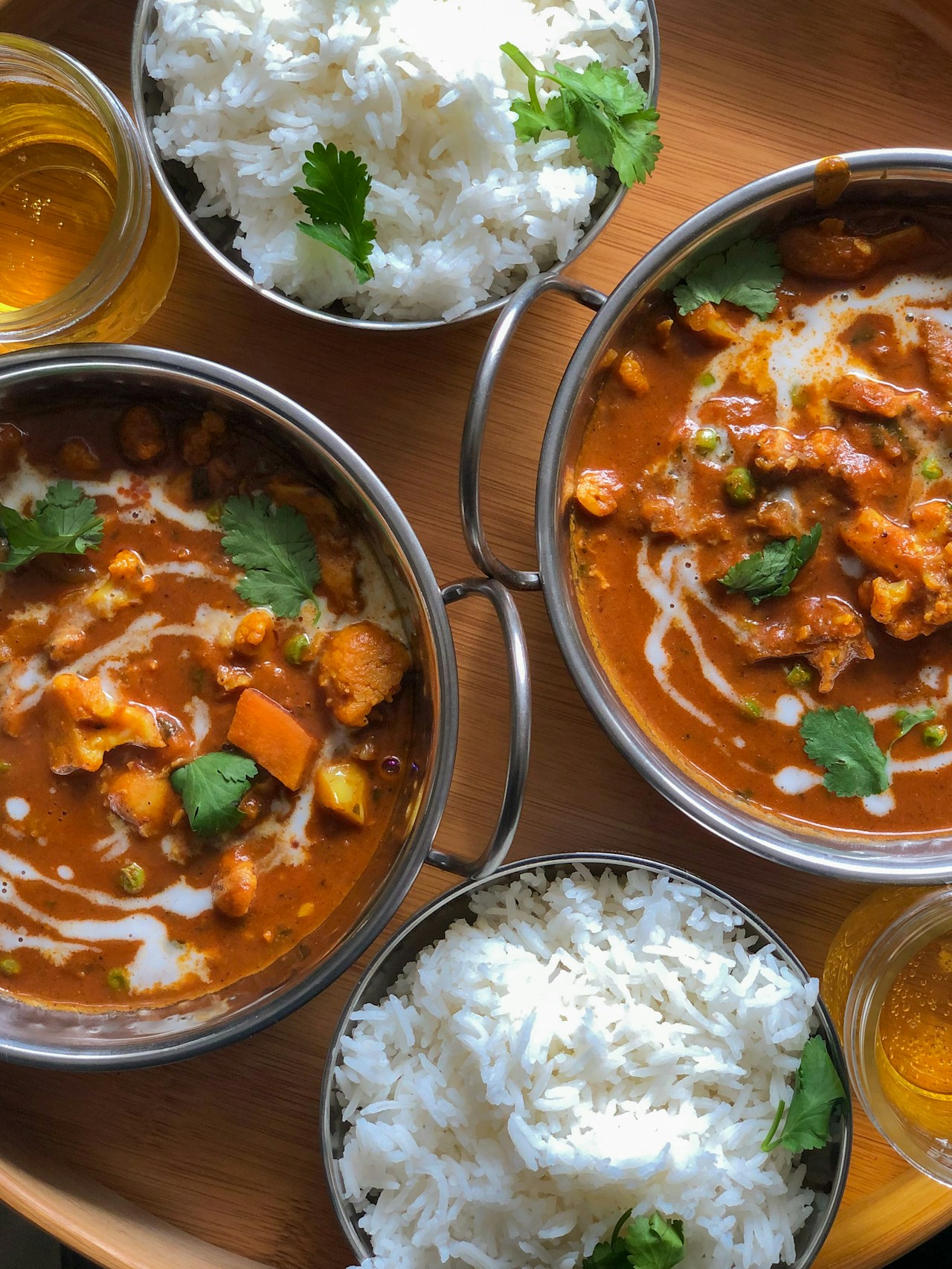
Inside, Durban curry takes center stage. Unlike sweeter British curry powders or coconut-rich Thai varieties, Durban curry is dark mahogany-red, intensely aromatic, and spicy. Chefs bloom star anise, cardamom, cinnamon, curry leaves, and dark roasted spices in oil before slow-simmering mutton, beef, chicken, or sugar beans. Potatoes—locally called 'gravis'—cook down until tender, releasing starch that thickens the sauce into a rich glaze that coats the inside walls of the loaf.
The golden rule: Put down the fork
Asking for a fork at a Durban takeaway shop immediately reveals you as a first-timer. Bunny chow is strictly a hands-on meal. You begin with the 'virgin' or 'qwa'—the piece of bread pulled from the loaf during prep that sits perched on top. Dip that straight into the curry pool to soak up the initial layer of oil and spice.
As the curry level drops, tear off pieces from the top edge of the bread wall, using each strip to pinch chunks of tender meat or potato. By the time you reach the bottom, the thick bottom crust has absorbed all the settled gravy and spice broth. That soaked base is widely considered the best part of the dish.
How to order like a local
Menus at local curry counter joints keep things simple, listing options by loaf size: a quarter, a half, or a full loaf. A quarter bunny makes a dense meal for one person, while a half easily feeds two.
Mutton is the perennial classic, made with bone-in cuts that give the broth deep savory flavor. Sugar bean bunnies offer a satisfying vegetarian option with plenty of chili kick. Almost every order comes topped with grated carrot and chili salad (sambal) to add crunch and contrast. If you're standing in front of a busy takeout counter in Durban or at a South African eatery abroad, opening the MenuDish app lets you scan the menu to match items with real dish photos, making it easy to gauge portion sizes and fillings before you order.
Don't cook it — find it.
See every dish on any menu before you order. Scan, see the photo, check allergens & nutrition.
Allergens: Gluten. The MenuDish app flags these automatically for every dish it scans.