Key takeaways
- Achuras (offal starters like mollejas and chorizo) hit the grill first and should be ordered before main steak cuts.
- Bife de chorizo is sirloin strip, Ojo de bife is ribeye, and Entraña is skirt steak.
- Argentine steak relies on coarse salt, chimichurri, and salsa criolla rather than heavy gravy or butter sauces.
- Ordering à la carte individual cuts usually yields better meat quality than ordering a mixed parrillada platter.
The starter course: Achuras and crispy provoleta
An Argentine steak dinner rarely begins with a main cut. The grate heats up in stages, and so does the meal. The top section of the menu usually lists achuras—grill-charred starters that cook quickly while the thicker beef cuts simmer over low coals.
Start with a wheel of provoleta, a thick slice of provolone cheese grilled until melted inside with a browned crust on the bottom, often sprinkled with oregano and chili flakes. Pair it with chorizo (a coarse pork and beef sausage) or morcilla (a warm, savory blood sausage). If you feel curious, order mollejas (sweetbreads, served crispy with fresh lemon squeezed on top) or chinchulines (beef small intestines grilled until crunchy). Skipping starters means sitting empty-handed for thirty minutes while your main steak cooks.
Decoding the beef cuts: Bife de chorizo, Ojo de bife, and Entraña
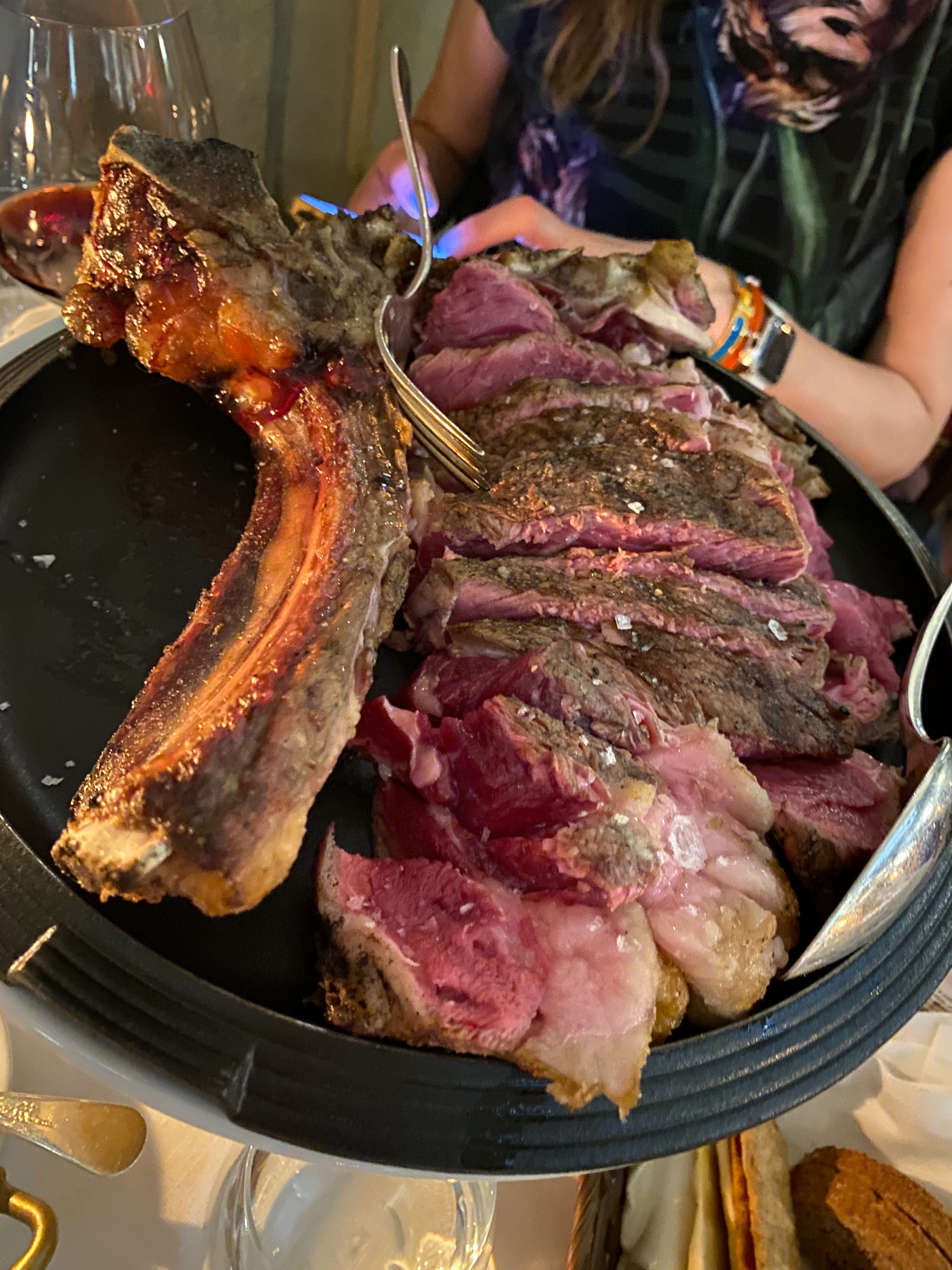
The core of the menu is where standard English butcher terms vanish completely. The biggest point of confusion is bife de chorizo. Despite the name, it has zero relation to sausage; it is a thick strip loin (similar to a New York strip) with a firm bite and a strip of rendered edge fat.
If you prefer heavy marbling and tenderness, look for ojo de bife, which is ribeye. For deep beef flavor with a chewier bite, entraña (skirt steak) is a prized local favorite—thin, intensely savory, cooked fast over high heat until the outer membrane turns crisp. When scanning a chalked menu outside a neighborhood spot, opening MenuDish lets you view real photos of matched cuts so you know whether you are picking a lean slab or a marbled cut before ordering.
The bone-in favorites: Tira de asado and Vacío
Beyond thick boneless steaks cut crosswise, traditional parrillas lean heavily on cuts carved lengthwise along the ribs or flank. These cuts sit longer over low heat and deliver rich fat rendered deep into the meat.
Tira de asado consists of flanken-cut short ribs sawn across the bone into long, thin strips. The meat clinging to the bone turns crispy on the outside and tender inside. Vacío comes from the flank area—a thick cut covered in a thin layer of skin and fat that seals in juices during slow roasting. It offers a dense grain and rich taste that needs nothing more than a pinch of coarse sea salt.
Doneness, chimichurri, and simple side dishes
Argentine grill masters (parrilleros) traditionally cook meat longer than North American or European chefs do. If you order without specifying, your steak will likely arrive medium to well-done. To get medium-rare, ask for jugoso (juicy). For rare, ask for vuelta y vuelta (seared briefly on each side). Medium is a punto, while well-done is bien cocido.
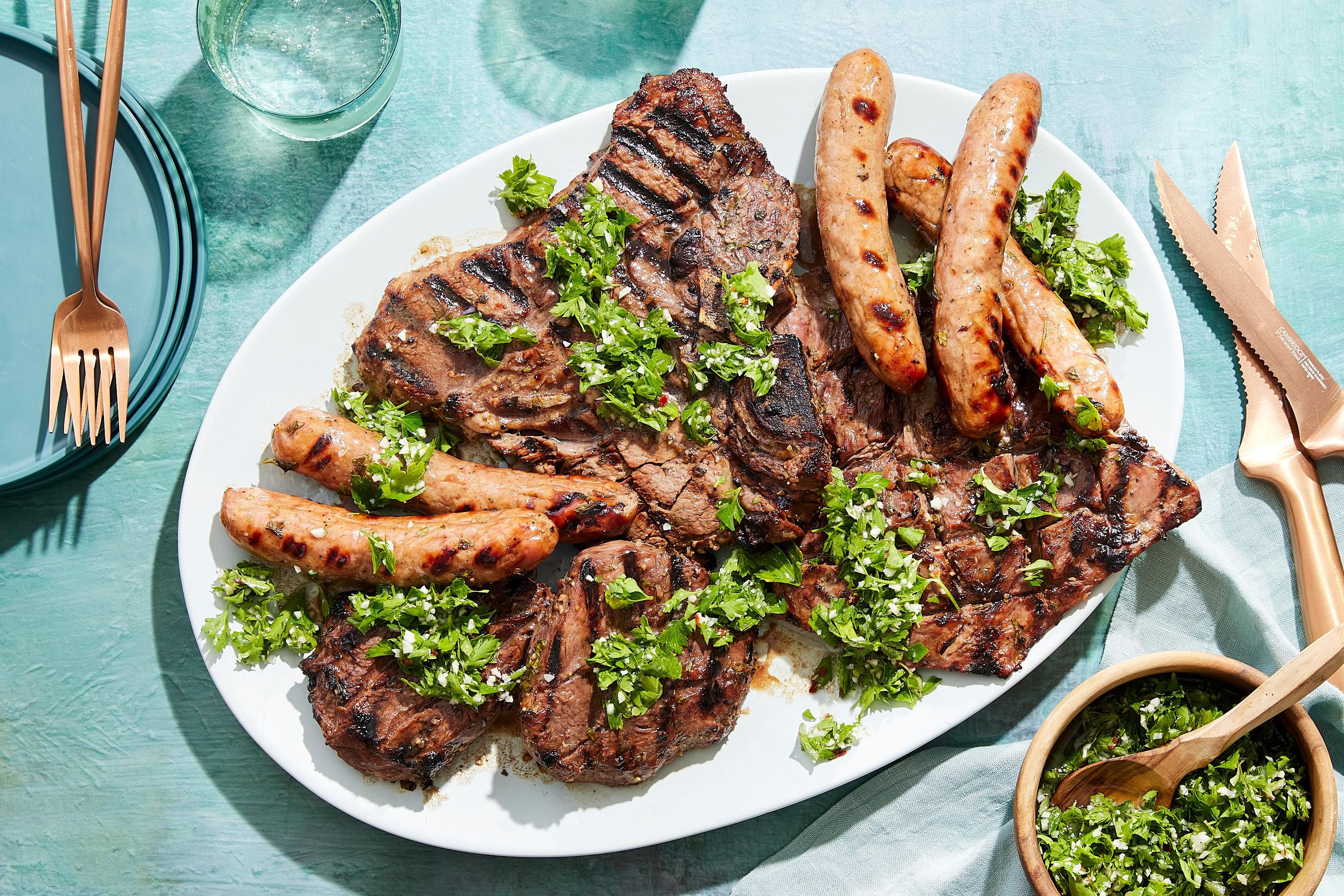
Do not expect heavy peppercorn or garlic butter sauces. Steak in Argentina relies on two simple table condiments: chimichurri (a cold sauce of parsley, garlic, oregano, oil, and vinegar) and salsa criolla (diced tomatoes, onions, and bell peppers in oil and vinegar). For sides (guarniciones), stick to papas fritas (fries, often topped with fried garlic and parsley as papas provenzal) or an ensalada mixta (lettuce, tomato, and onion) to balance the fat.
Parrillada platters vs. ordering à la carte
Most menus feature a combo called a parrillada or tabla de carne, served on a mini metal table grill loaded with glowing embers that sits right at your table. While it makes a great photo, consider how you want to eat.
Parrilladas designed for two or four people are often loaded with offal, kidney (riñón), blood sausage, and bony rib ends. If your table loves offal and rustic variety, it is a fun option. But if you want prime steak cooked to a specific temperature, skip the mixed platter. Order individual cuts a la carte along with a hot wheel of provoleta and sweetbreads to share first. You will get thicker, better-trimmed beef cooked right how you like it.
Don't cook it — find it.
See every dish on any menu before you order. Scan, see the photo, check allergens & nutrition.