Key takeaways
- Sushi menus are organized by style (nigiri, sashimi, maki) and fish type (red meat, white fish, silver fish, shell species).
- Tuna is divided into cuts: lean Akami, balanced Chutoro, and rich, marbled Otoro from the belly.
- Silver fish (hikari-mono) like mackerel and sardine are cured in vinegar and offer bold, savory oiliness.
- Dip the fish side of nigiri into soy sauce, never the rice, to avoid crumbling the grain structure.
Nigiri, Sashimi, or Maki: Knowing Your Canvas
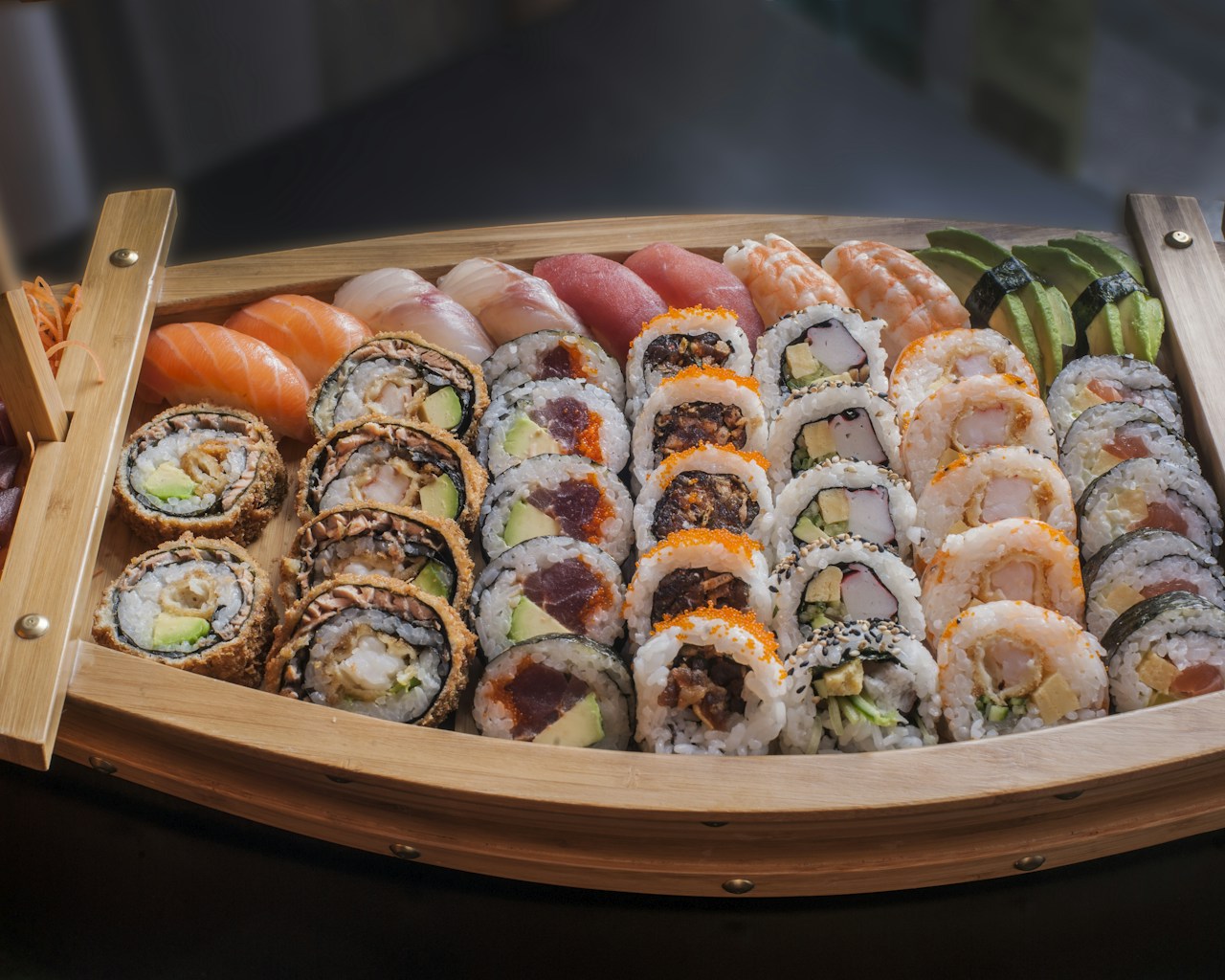
Before picking your fish, look at how the menu organizes the prep style. Sashimi refers to raw sliced fish served entirely on its own—no rice, no seaweeds. It is the purest way to evaluate the knife work and freshness of the catch.
Nigiri consists of a hand-pressed mound of seasoned vinegar rice topped with a draped slice of fish, often brushed with a light glaze or dotted with a hint of fresh wasabi underneath. Maki are rolled sushi rolls wrapped in nori seaweed, ranging from simple slim rolls (*hosomaki*) containing a single ingredient like cucumber or iron-rich tuna to wide multi-ingredient rolls (*futomaki*).
Maguro vs. Toro: Decoding the Tuna Hierarchy
Tuna (maguro) occupies prime real estate on almost every sushi menu, split into precise cuts based on fat content. Akami is the deep red, lean meat from the upper spine. It offers a clean, iron-forward acidity with firm texture and almost no fat.
As you move down toward the belly, you encounter Chutoro, the medium-fatty cut that blends lean flesh with ribbons of sweetness. At the top of the price scale sits Otoro, taken from the lowest section of the belly. Otoro is heavily marbled with pink fat that literally melts at room temperature, delivering an intensely rich, buttery bite.
Shiromi and Hikari-mono: The Hidden Gems
Beyond salmon and tuna, Japanese menus highlight delicate white fish (shiromi) and silver-skinned fish (hikari-mono). White fish like Tai (sea bream) and Hirame (flounder) feature subtle sweetness and firm chew, frequently finished with a squeeze of sudachi citrus or sea salt.
Silver fish like Shime Saba (cured mackerel), Sanma (pacific saury), and Kohada (gizzard shad) are marinated in salt and rice vinegar to balance their natural oils. They pack a complex, savory tang that seasoned sushi diners look for first.
Uni, Ikura, and Hotate: Rich and Briny Delicacies
Shellfish and roe add distinct textures to a nigiri ordering run. Hotate (sweet Hokkaido scallop) is sliced thick, yielding a creamy, tender bite that pairs well with sea salt. Ikura (cured salmon roe) arrives as a small gunkan wrap, bursting with salty ocean brine when bitten.
Uni (sea urchin tongue) ranges from bright yellow to deep orange, carrying a rich custard-like sweetness. If you see both freshwater eel (Unagi) and sea eel (Anago) listed, remember that Unagi is glazed in a sweet soy reduction and grilled rich, while Anago is simmered until soft, airy, and gentle in flavor.
Omakase vs. À la Carte: When to Hand Over Control
When ordering Omakase (literally translating to 'I leave it to you'), the chef selects every bite based on morning market arrivals and seasonal peaks. It removes the stress of choosing, though you give up control over sequence and ingredients.
If you prefer ordering piece by piece off an unfamiliar Japanese menu, open MenuDish to scan text-heavy menus and see matched photos of exact fish species and cuts. Seeing what Engawa (flounder fin edge) looks like next to Kanpachi (amberjack) helps you build an à la carte order with total clarity.
Ginger, Soy Sauce, and Chopsticks: Counter Etiquette
Eating at a traditional sushi counter comes with subtle norms. Nigiri is intended to be picked up directly with your fingers or chopsticks. Turn the piece upside down slightly so only the fish touches the soy sauce—dunking rice into soy sauce dissolves the mound and ruins the rice seasoning.
Pickled ginger (gari) serves as a palate cleanser eaten between different fish pieces; avoid piling ginger on top of nigiri while eating. Lastly, if the chef already brushed glaze (nikiri) on top of your piece, skip the soy sauce bowl entirely.
Don't cook it — find it.
See every dish on any menu before you order. Scan, see the photo, check allergens & nutrition.