Key takeaways
- A standard Sri Lankan meal is rarely just one main item; it relies on a central starch balanced by 3 to 5 contrasting side curries and relishes.
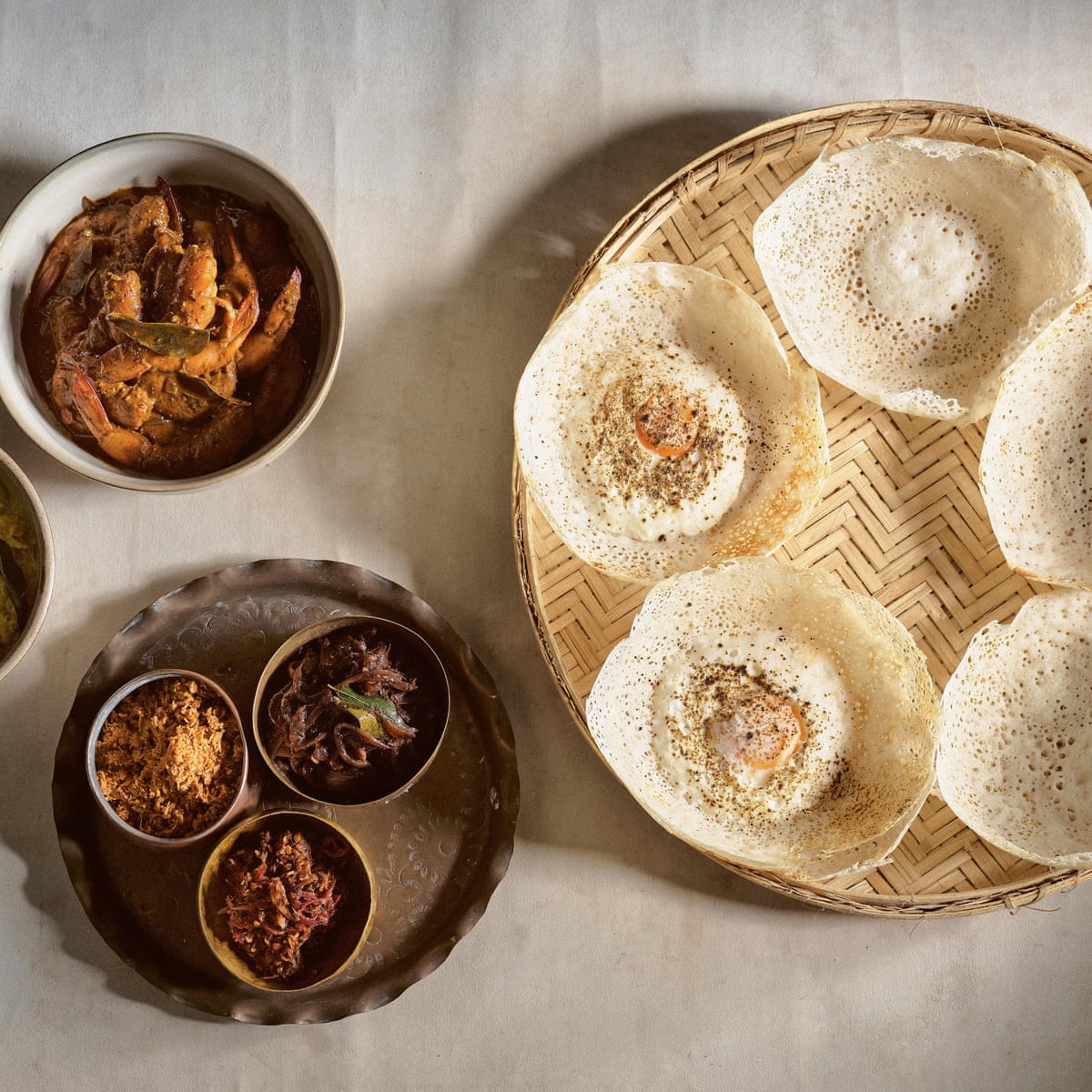
- Hoppers (appam) are bowl-shaped coconut-rice crepes eaten for breakfast or dinner, while string hoppers are steamed rice-noodle nests.
- Kottu roti is street-food stir-fry made by chopping godamba flatbread with metal blades alongside spices, vegetables, and meat or eggs.
- Pol sambol (fresh coconut relish) and seeni sambol (sweet-spicy onion jam) provide essential acidity and heat to balance heavy curries.
Rice and Curry Is an Ecosystem, Not a Single Dish
When a menu lists Rice & Curry, do not expect a neat mound of white rice with a ladle of single gravy on top. Sri Lankan dining revolves around an entire array served together on a broad plate or banana leaf. You choose a base—usually white basmati, red red-rice (samba or matta), or yellow ghee rice—and the kitchen surrounds it with five or six small dishes.
A typical set includes a spiced lentil curry (parippu), a green leaf salad cooked with freshly grated coconut (mallung), a roasted spicy veg or meat curry, and a crisp papadam. The key flavor driver is dark roasted curry powder, where coriander, cumin, and fennel seeds are toasted until near-chocolate brown before grinding, giving Sri Lankan curries their deep, earthy complexity.
Hoppers vs. String Hoppers: Bowl Crepes and Noodle Nests
If you visit during morning or evening hours, starch options shift dramatically away from plain rice. Hoppers (known locally as appam) are made from a fermented batter of rice flour and coconut milk cooked in a high-sided, curved wok. The result is a thin bowl with crisp, lace-like edges and a soft, spongy coconut center. An egg hopper drops a whole egg into the middle right before the lid goes on, leaving a soft yolk that breaks into your condiments.
String hoppers (idiyappam) are entirely different. Rice flour dough is pressed through fine tubes into tiny circular mats and steamed. They arrive in stacks of five to ten, designed to soak up mild coconut gravies like sothi or sharp chili pastes. If you stare at terms like parippu or ambul thiyal on a dense printed board, opening MenuDish lets you scan the menu to match Sinhala and Tamil names with real dish photos and ingredient profiles before ordering.
Kottu Roti: The Rhythmic Street-Food Favorite
You will often hear a kottu roti station long before you spot it on the menu. Cooks take thin, oily flatbread (godamba roti), throw it onto a blazing flat-top grill, and slice it down into ribbons with two heavy steel blades. The rhythmic metallic clacking signals that dinner is underway.
The cut flatbread gets scrambled together with shredded cabbage, carrots, onions, eggs, and your choice of protein—usually chicken, beef, mutton, or fried cheese (paneer). A heavy splash of hot curry gravy goes in right at the end to bind everything together into a smoky, chewy stir-fry. It is rich, salty, and best consumed immediately with an ice-cold drink.
Decoding the Proteins: Ambul Thiyal to Black Pork
Meats and fish in Sri Lankan cooking are handled with punchy marinades that double as natural preservatives. Malu Ambul Thiyal is a classic sour fish curry, usually made with firm kingfish or tuna. The fish is coated in a dark paste made from dried goraka (gamboge fruit), black pepper, and garlic, then simmered until liquid evaporates, leaving a tangy, dark crust.
If you see Black Pork Curry on the board, expect pork shoulder cut into bite-sized pieces and tossed with heavy black pepper, dark roasted spices, and vinegar. The fat renders into the sauce, creating an intensely savory dish that screams for plain rice or steamed hoppers to soak up the pan drippings.
Sambols, Mallungs, and the World of Short Eats
No meal is complete without raw or quick-cooked condiments placed around your plate. Pol Sambol mixes freshly grated coconut with ground red chili, lime juice, red onions, and tiny pieces of cured Maldive fish (cured tuna flakes used like anchovies for umami). Seeni Sambol is a slow-caramelized onion jam spiked with cinnamon and chili.
Before the main meal, Sri Lankan venues frequently display a glass cabinet near the register filled with short eats. These finger foods include mutton rolls (panko-crusted crepes stuffed with spiced meat and deep-fried), fish cutlets (crispy spiced fish balls), and egg patties. Grab two or three as a starter while waiting for your hoppers or rice plates to be prepared.
Don't cook it — find it.
See every dish on any menu before you order. Scan, see the photo, check allergens & nutrition.