Key takeaways
- Leche de tigre is the tangy lime, garlic, and chili broth formed when fish cures—often served on its own in a glass.
- Ceviche uses thick cubes of raw fish with onions; Tiradito uses thin sashimi-style slices without onions.
- Platters labeled 'Mixto' combine fish with octopus, squid, and shrimp for varied texture.
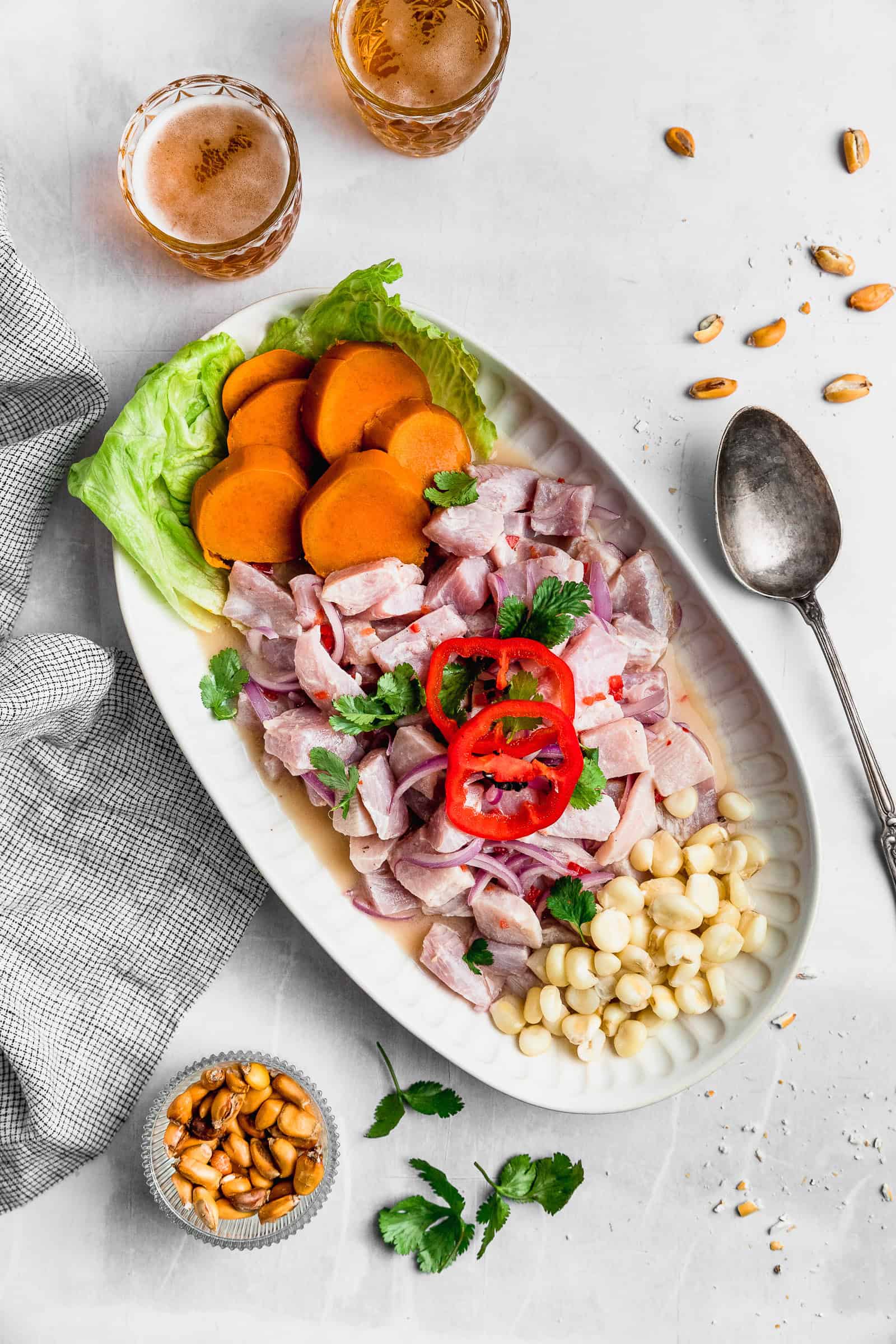
- Sweet potato (camote) and giant corn (choclo) balance the searing sharpness of the citrus broth.
The heart of every dish: Leche de tigre
Before picking a dish, you have to understand leche de tigre (tiger's milk). It isn't dairy, and it has nothing to do with wild cats. It's the intensely sour, salty, chili-laced citrus marinade formed when fresh key lime juice cures raw fish, garlic, cilantro, and sliced red onions.
On many cebichería menus, you'll see Leche de Tigre listed as its own starter item. Order this, and you'll get a tall glass or bowl filled with the tart curing liquid, studded with small chunks of white fish, crunchy toasted corn kernels (canchita), and boiled giant corn (choclo). Locals drink it as an antidote to late nights or a sharp mid-day refresher.
Ceviche vs. tiradito: The knife cuts matter
Both dishes center on raw seafood marinaded in lime juice, but the technique and texture set them apart. Traditional Ceviche Clásico features thick cubes of firm white fish—often sea bass, flounder, or corvina—tossed in lime juice right before serving so the outside turns opaque while the center stays silky.
Tiradito, born from Japanese immigration to Peru, features paper-thin slices of fish reminiscent of sashimi. Crucially, tiradito never contains raw onions, and the kitchen pours the emulsion—frequently flavored with yellow ají amarillo or red ají rocoto chilies—over the fish immediately before it hits your table so it doesn't cure as deeply.
Mixto, jalea, and the crisp contrast of pota
If you only want fish, stick to de pescado. But if you want varied textures, look for Ceviche Mixto, which adds poached octopus, squid, and shrimp to the bowl. Pay special attention to dishes featuring chicharrón de pota—crispy, cornstarch-battered fried jumbo squid strips. Many top cebicherías serve hot fried squid directly on top of cold ceviche, offering a sharp contrast between steaming crunch and ice-cold citrus cure.
For an entirely fried feast, look for Jalea Mixta: a piled-high platter of lightly fried white fish and mixed seafood topped with a bright salsa criolla made of sliced red onions, cilantro, and lime juice.
Sweet potatoes, canchita, and when to eat
Every proper ceviche comes anchored by two essentials: a thick slice of cold boiled sweet potato (camote) and large-kernel Peruvian corn (choclo). The starch and natural sweetness temper the acid and chili heat of the citrus broth. On the table, you'll also find a bowl of canchita—salty, toasted chulpe corn kernels that crunch like unpopped popcorn.
In Peru, traditional cebicherías close by late afternoon because coastal cooks historically relied on morning catches and avoided serving raw fish after sundown. While modern places serve seafood all night, ordering early guarantees the crispest texture.
Deciphering mysterious menu terms
When daily specials feature regional catches like lenguado (sole), corvina (sea bass), or cojinova (butterfish), reading a dense chalkboard menu can get tricky. Spotting local dish names like Tiradito al Olivo (drizzled with black botija olive sauce) or Arroz con Mariscos (savory seafood rice) becomes much simpler when you can see what you are ordering.
If you're stuck between a hot seafood soup and a cold cured plate, scanning the menu with MenuDish translates Spanish culinary terms and matches items to real photos of the actual dishes so you know whether you're getting a light sashimi plate or a heavy fried rice platter.
Don't cook it — find it.
See every dish on any menu before you order. Scan, see the photo, check allergens & nutrition.
Allergens: Fish, Shellfish. The MenuDish app flags these automatically for every dish it scans.