Key takeaways
- Al pastor uses vertical-spit roasted pork, while suadero is fat-braised beef flank.
- Tripa (beef intestine) is best ordered 'bien dorada' for extra crispiness.
- Campechano mixes multiple meats like suadero, longaniza sausage, and chicharrón in one taco.
- Test creamy orange or bright yellow salsas before drizzling—they usually contain habaneros.
The core lineup: Al pastor, carnitas, and suadero
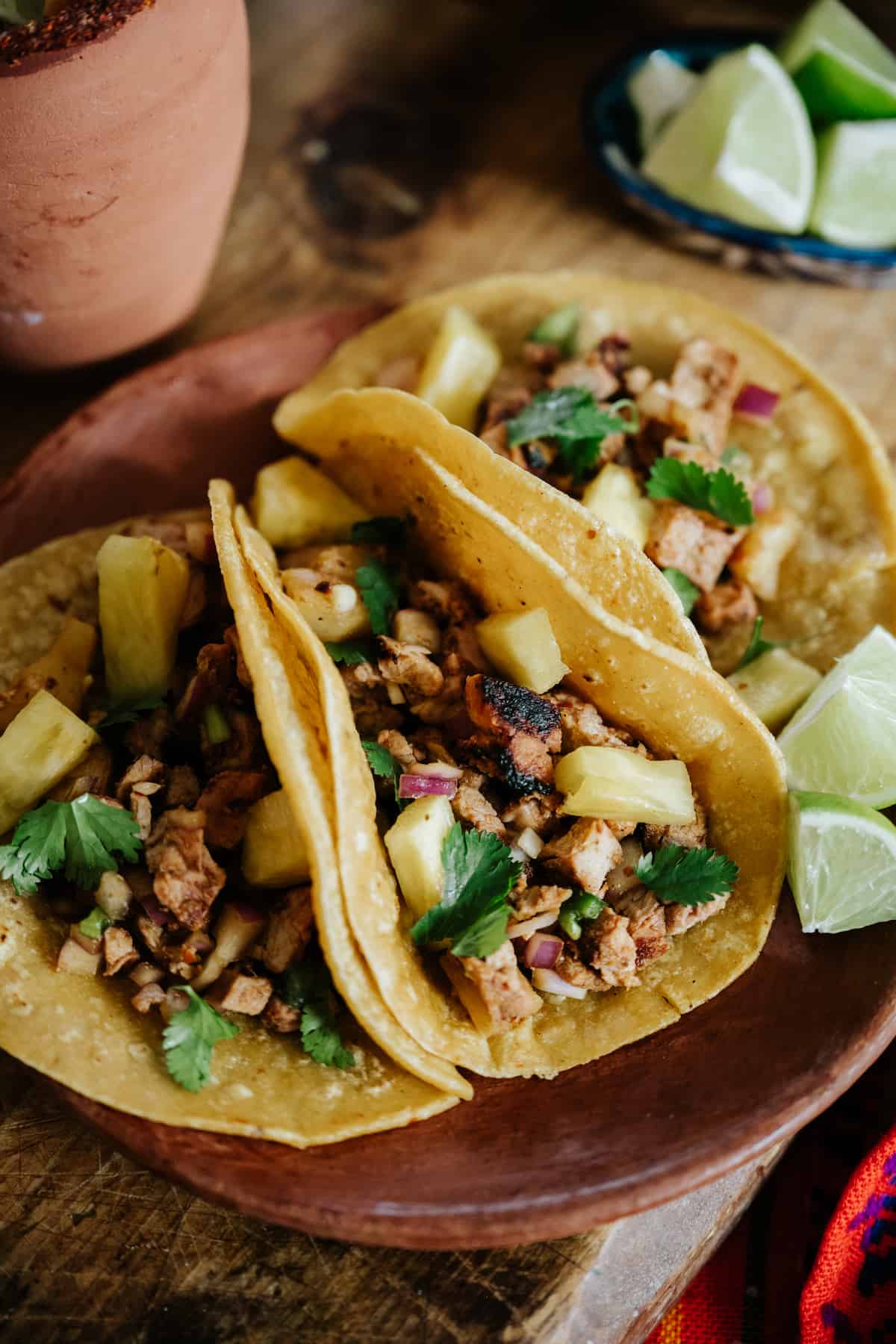
Every legendary taquería builds its reputation on a signature technique. Al pastor is pork marinated in dried chilies, achiote paste, and vinegar, stacked onto a vertical spit called a trompo. The taquero slices thin strips straight off the spit onto double corn tortillas, often catching a small piece of roasted pineapple flicked directly from the top.
Carnitas hails from Michoacán and consists of pork slowly cooked in its own fat inside copper kettles until golden. If a menu lists specific carnitas parts, maciza is lean shoulder or loin, while costilla brings richer, bone-in rib meat.
Then there is suadero—a slow-confit cut of beef flat meat cooked in a large circular stainless steel pan filled with oil and lard. Sitting between the rib eye and flank, it delivers a buttery texture with crispy griddled edges that pair perfectly with raw white onion and cilantro.
Offal and lesser-known cuts: Cabeza, buche, and tripa
Traditional street stalls use every single part of the animal. If you see cabeza on the board, it refers to steamed beef head meat, known for being tender, rich, and juicy. Within cabeza, taquerías often break down sub-cuts: lengua (beef tongue, surprisingly mild and smooth), cachete (fatty beef cheek), and sesos (creamy beef brains).
Buche is pork stomach braised until tender, offering a delicate chew similar to pork belly skin. Tripa is small intestine cleaned and simmered before hitting the flat-top griddle. If you order tripa, ask the cook for bien dorada if you prefer it extra crispy like bacon rather than soft and rubbery.
Beyond standard tacos: Campechano, mulitas, and vampiros
Taquería menus also feature structural variations that go beyond the basic taco setup. A campechano taco mixes two or three meats—usually beef suadero, spicy longaniza pork sausage, and crunchy chicharrón—loaded onto one tortilla. It is savory, salty, and texturally complex.
If you want melted cheese on your plate, look for a gringa, which features al pastor meat and melted quesillo folded inside a flour tortilla. A mulita places meat and melted cheese sandwiched flat between two warm corn tortillas. Vampiros take crunch even further: the tortilla is griddled dry on the coals until it turns into a tostada shape, topped with melted cheese, charcoal-grilled meat, and mashed avocado.
Salsa etiquette and condiment bar rules
Tacos arrive at your table deliberately simple: meat on tortillas with chopped onion and cilantro. The rest of the flavor profile comes from the condiment bar or small squeeze bottles brought to your table.
Red salsa (salsa roja) typically relies on roasted arbol or guajillo chilies for smoky depth. Green salsa (salsa verde) uses fresh or boiled tomatillos and serranos for bright acidity that cuts through heavy meats like carnitas. Watch out for pale orange or yellow creamy sauces—these usually get their color from blended habaneros and pack serious heat. A smart habit is dabbing a single drop onto your hand or a spare chip to test temperature before dressing your whole taco.
How to order without guessing
When chalkboards list vague cut names without descriptions, ordering can feel like rolling dice. Pointing at what someone else is eating works well enough when you are standing at the counter. But if you want to know exact ingredients before queuing up, scanning the menu with MenuDish matches Mexican menu terms with real dish photos and ingredient breakdowns, so you always know whether you are ordering tender cheek meat or crispy intestines.
Don't cook it — find it.
See every dish on any menu before you order. Scan, see the photo, check allergens & nutrition.