Key takeaways
- Split broth pots (Yuan Yang) let you run a spicy Sichuan mala broth alongside a mild mushroom or bone broth.
- Paper-thin meats cook in under 15 seconds, while root vegetables and thick tofu need several minutes.
- Dipping sauces act as a cooling heat shield for spicy broths—sesame paste and garlic sesame oil are classic bases.
- Order items in waves rather than cluttering the entire table at once.
The Grid System: How Hot Pot Ordering Works
Unlike a traditional restaurant meal where your food arrives fully assembled, hot pot places you in charge of the cooking process. The order slip is usually grouped into four distinct categories: broth bases, proteins, vegetables and starches, and sides or specialty items.
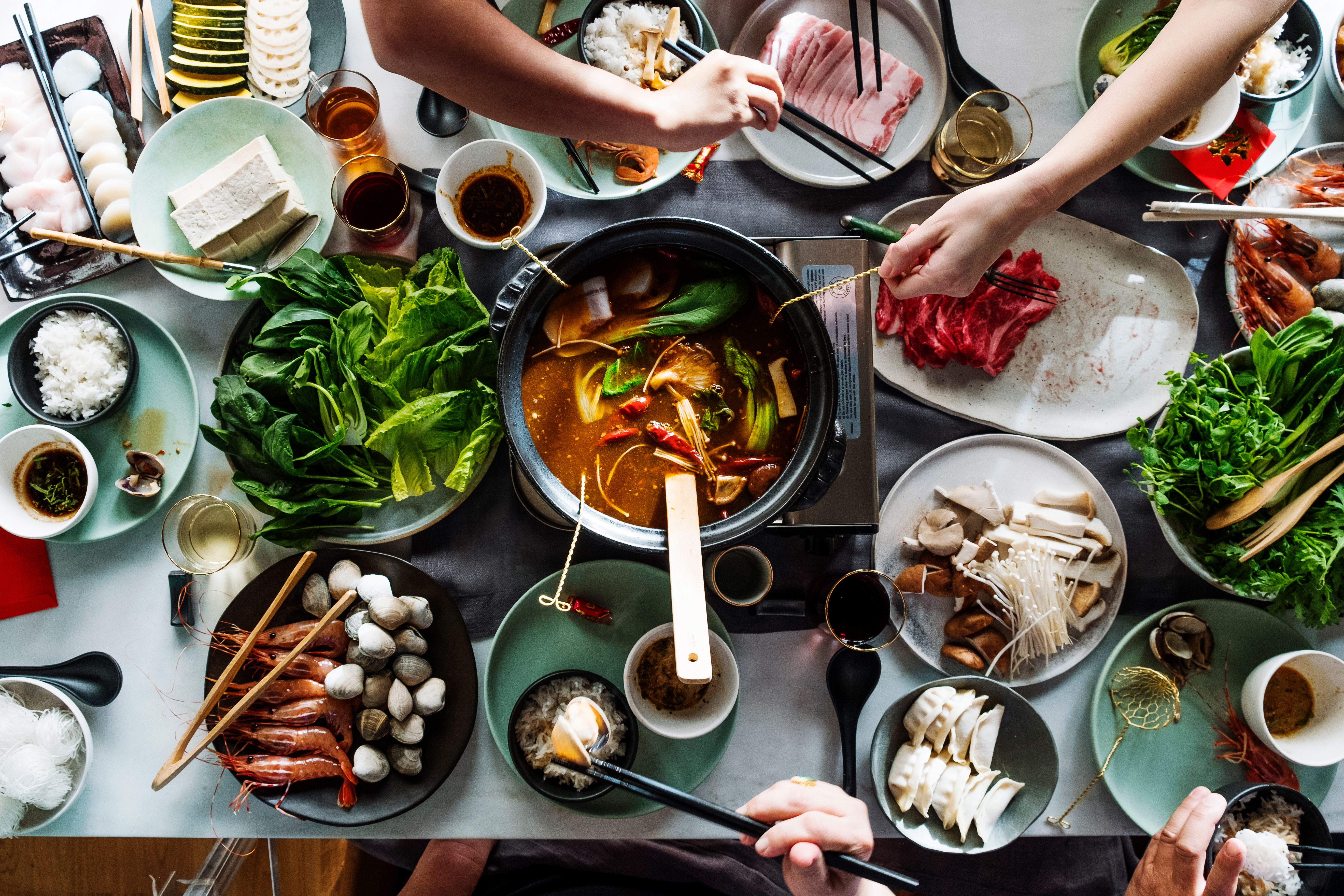
First, you choose your vessel. Almost every restaurant offers a Yuan Yang pot (鸳鸯锅), a split pot separated down the middle by a metal divider. Choosing a split pot is standard practice because it gives you two completely different flavor profiles at once—usually one fiery and numbing, and one mild and savory.
Broth Math: Numbing Spice vs. Savory Simmer
The broth dictates how your ingredients will taste when pulled from the pot. The most famous option is Sichuan Mala (麻辣锅), rendered with beef tallow or vegetable oil, whole dried chili peppers, and Sichuan peppercorns. It produces a tingling, numbing sensation (má) paired with deep chili heat (là).
If you prefer less heat, look for Pork Bone Broth (猪骨汤), a milky white stock rich in collagen, or Wild Mushroom Broth (野生菌汤), which brings an earthy umami base. Japanese-influenced hot pot spots might offer a sweet soy-based Sukiyaki base or a tart tomato broth (番茄锅) that pairs exceptionally well with sliced beef.
Decoding Proteins: Rolled Ribeye, Tripe, and Shrimp Paste
Meats for hot pot are sliced paper-thin so they cook in seconds. Look for Fatty Beef (肥牛), typically rolled ribeye or brisket with visible ribbons of fat that keep the meat tender. Lamb Shoulder Rolls (羊肉卷) are equally popular, offering a distinct gamey flavor that cuts through spicy mala broths.
Beyond standard cuts, you will see raw seafood pastes served in bamboo tubes. Shrimp Paste (虾滑) is scraped into small balls directly into the boiling broth using a mini spatula. Texture lovers should try Honeycomb Tripe (毛肚) or duck intestines—these only take 8 to 10 seconds of dipping (often called the 'seven dips and eight swishes' rule) to achieve a crisp, snappy texture.
Tofu Formats, Greens, and Starch Timings
Tofu appears in several forms on a hot pot slip, and each handles broth differently. Fried Tofu Skin Rolls (响铃卷) absorb broth instantly—flash-dip them for three seconds so they stay slightly crisp. Frozen Tofu (冻豆腐) acts like a dense sponge, soaking up spicy soup in its icy air pockets, while fresh silken tofu softens smoothly in mild broths.
For vegetables, order crisp greens like crown daisy (tong ho), napa cabbage, and lotus root slices. Drop dense root vegetables and potato slices in early so they tenderize. Finish the meal with Wide Glass Noodles (宽粉) or hand-pulled noodles, which drop into the rich, concentrated liquid left at the end of the night.
Cracking the Sauce Bar Code
Once your broth is lit, head straight to the dipping sauce counter. The sauce serves two purposes: adding personal flair and cooling down piping-hot ingredients before they hit your tongue.
For a northern Chinese style sauce, mix two spoonfuls of thick sesame paste (芝麻酱) with a dash of soy sauce, chopped garlic, cilantro, and scallions. If eating spicy Sichuan hot pot, build a Chengdu-style sesame oil bowl: garlic, crushed peanuts, oyster sauce, and pure sesame oil. The oil coats your stomach and dampens the sting of the chili heat.
What to Do When the Menu Has Zero Photos
When you encounter a paper order slip printed entirely in Chinese characters or vague English translations like 'special beef part,' ordering blind can feel risky. You might accidentally order tendon when you wanted ribeye, or miss out on fresh bamboo shoots entirely.
If you are stuck staring at a plain text list, opening MenuDish allows you to scan the paper menu with your phone camera. Instead of trying to parse character translations, the app matches the listed dishes with real photos of raw rolls, paste tubes, and tofu cuts, letting you verify exactly what is hitting your table before you mark the box.
Don't cook it — find it.
See every dish on any menu before you order. Scan, see the photo, check allergens & nutrition.