Key takeaways
- Brauhaus menus are organized by preparation style: roasted joints, sausages, pan-fried cutlets, and hearty soups.
- Compounded German words reveal the dish: 'Schweine' means pork, 'Rinder' means beef, and 'Braten' means roast.
- Drink orders come first; brauhaus service is brisk, so pick your beer within thirty seconds of sitting down.
- Carb sides like Knödel (dumplings) and Spätzle are tailored specifically to soak up rich gravy.
Drink orders happen before you touch the food menu
In a traditional German brauhaus, beer is not an accompaniment to dinner; it is the reason the venue exists. Within thirty seconds of taking your seat at the scrubbed pine table, a server will ask for your drink order. There is rarely a long cocktail list. In Cologne, expect a tiny glass of crisp Kölsch. In Munich, a half-liter or liter glass of Helles or Weissbier is standard.
If you delay or ask for ten minutes to study the menu, expect a brief nod and a long wait before the server returns. Pick your drink fast, take a sip, and then turn your attention to the laminated menu.
Cracking the code on pork: Haxe, Braten, and Schnitzel
German menus look daunting because words fuse together into long compound nouns. Breaking them down into base ingredients makes ordering straightforward. Pork (Schweine-) dominates most brauhaus kitchens.
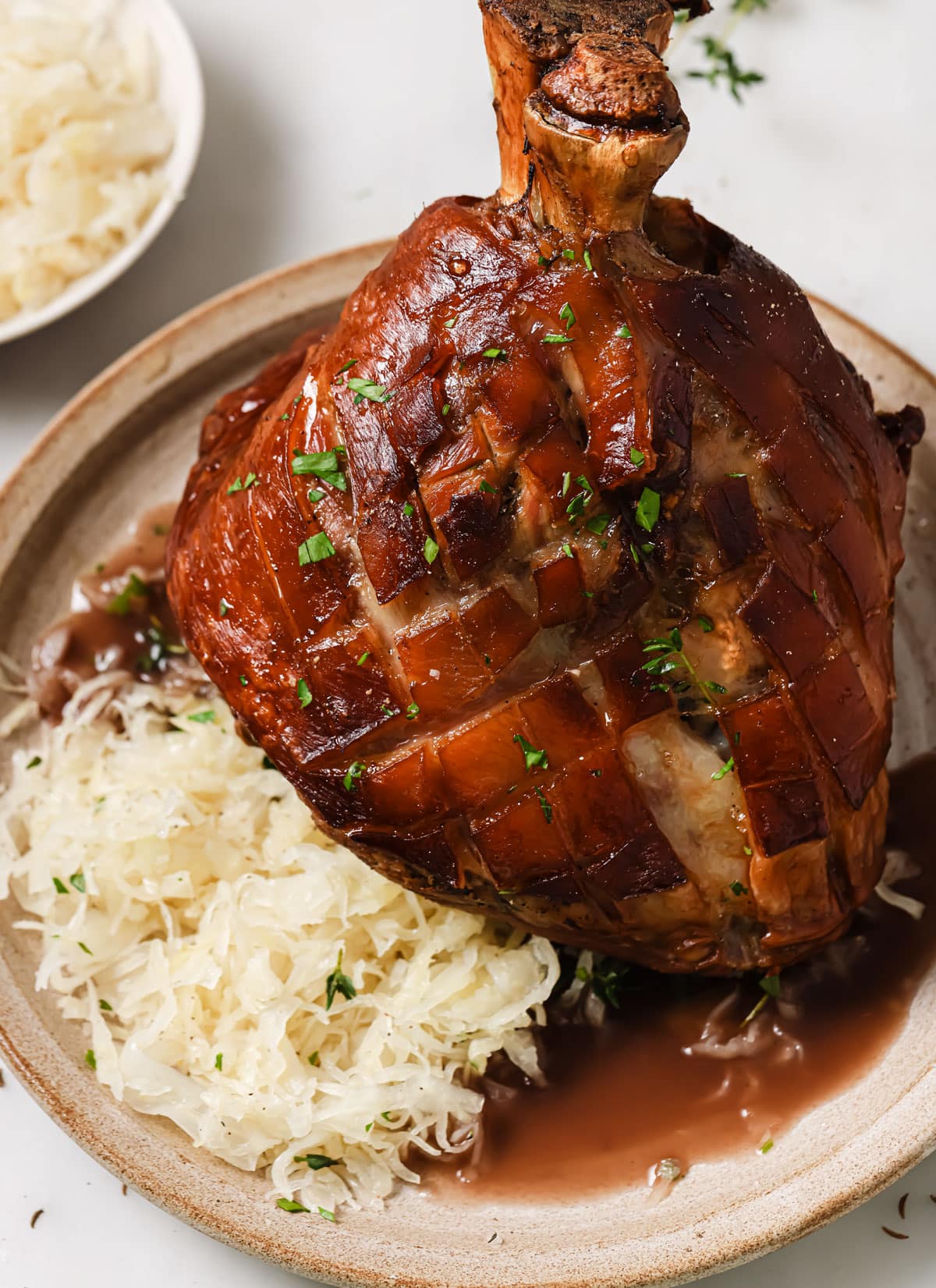
Schweinhaxe is the roasted pork knuckle with crackling skin that shatters under a knife. It usually arrives with a massive potato dumpling sitting in dark pork gravy. If you see Eisbein, that is the pickled, boiled version of the same cut—tender, pink, and seasoned with bay leaf and mustard seed.
Schweinebraten refers to sliced pork shoulder slowly roasted with caraway seeds and dark beer broth. If you prefer pan-fried meat, look for Schnitzel Wiener Art, a pounded pork cutlet fried in breadcrumbs, distinct from authentic Viennese veal schnitzel.
Sausages: White, grilled, and curry-spiced
The sausage section (Würstchen or Bratwurst) runs deep. Ordering the wrong sausage at the wrong time of day is a common tourist stumble.
Weißwurst are delicate white veal and pork sausages seasoned with parsley, lemon, and mace. In Bavaria, tradition dictates eating them before noon, pulled hot from a bowl of warm water, peeled with a knife, and eaten with sweet mustard (Süßer Senf) and a soft pretzel.
For dinner, order Nürnberger Rostbratwürstchen—finger-sized marjoram-scented pork sausages grilled over beechwood—or Thüringer Bratwurst, seasoned heavily with caraway and garlic. Currywurst is fried pork sausage sliced and drenched in warm spiced tomato ketchup, usually served with fries.
Knödel, Spätzle, and cabbage sides
Brauhaus mains come heavily sauced, so the carb choices are designed to soak up beef and pork gravies.
Semmelknödel are dense bread dumplings made from stale rolls, milk, parsley, and egg. Kartoffelknödel are smooth potato dumplings with a chewy texture. If you order a stew or roasted cut, expect at least one dumpling on your plate.
Kässpätzle is egg noodle pasta tossed with grated Bergkäse cheese and topped with sweet caramelized onions. Rotkohl (braised red cabbage cooked with apples and cloves) brings acidity to balance heavy meats, while Sauerkraut provides a tart, salty crunch.
Matching unfamiliar menu terms with real photos
Even with basic terminology down, chalkboard specials and regional dialects can throw you off. Terms like Sauerbraten (marinated sour roast) or Leberkäse (baked bavarian meatloaf despite the name translating literally to liver cheese) confuse diners expecting plain steaks.
Scanning the printed menu with MenuDish clears up confusion fast. The app reads the German menu terms, translates regional cuts, and matches dish names to real photos so you see whether you are getting a crispy roasted shank or a pickled sausage before placing your order.
Paying the bill and brauhaus tipping norms
When you are ready to leave, catch your server's eye and say Zahlen, bitte (Pay, please). The server carries a heavy leather coin pouch and calculates your bill directly at your table.
If paying cash, hand over your notes and state the rounded total including tip. For instance, if the bill is €26.50, hand over a €30 note and say "29, bitte." The server will hand back €1 in change. Leaving cash tips loose on the table is considered improper form in traditional German beer houses.
Don't cook it — find it.
See every dish on any menu before you order. Scan, see the photo, check allergens & nutrition.