Key takeaways
- Ethiopian dining is communal, often with dishes served on a large platter of injera to be shared.
- Injera is a spongy, slightly sour flatbread used as both plate and utensil for scooping food.
- Wats (or wots) are flavorful stews, with Doro Wat (chicken) and Misir Wot (lentil) being popular choices.
- Many Ethiopian dishes are naturally vegetarian or vegan, especially during fasting periods.
- Don't be afraid to eat with your hands – it's the traditional and most authentic way to enjoy Ethiopian food.
The Heart of Ethiopian Dining: Injera
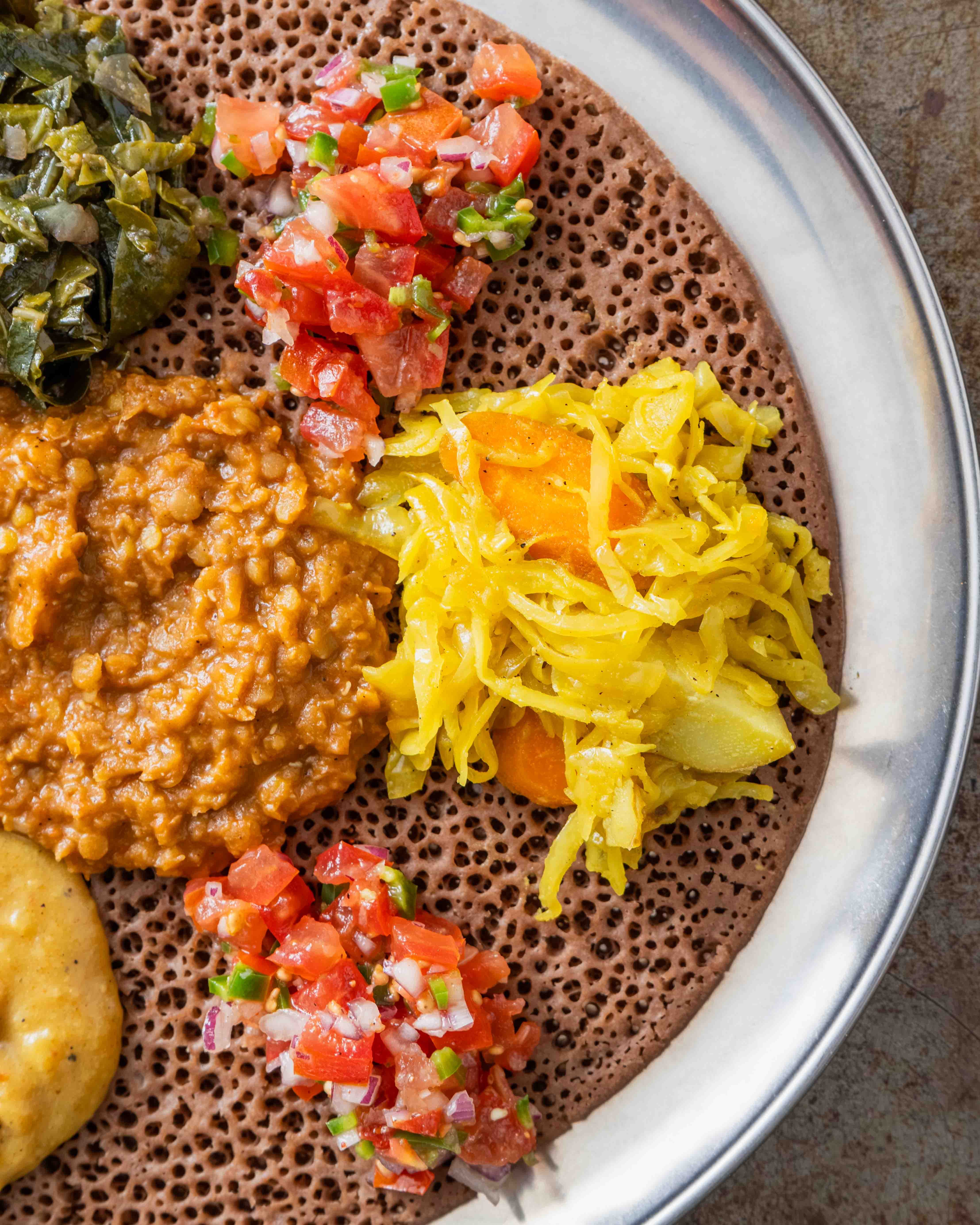
Let's start with the cornerstone: injera. This isn't just bread; it's your plate, your fork, and a crucial flavor component all rolled into one. Injera is a large, spongy, slightly sour flatbread made from teff flour, a tiny grain native to Ethiopia. It arrives at your table covering a large round platter, with various stews and vegetables piled artfully on top. The texture is unique – soft, pliable, and almost velvety, with tiny air pockets that perfectly absorb the rich sauces.
Don't be shy about eating with your hands; it's the traditional way. You tear off a piece of injera, use it to scoop up a mouthful of stew, and enjoy. The subtle tang of the injera cuts through the spices of the dishes, creating a beautifully balanced bite. If you’re unsure, just watch your dining companions or ask your server for a quick demonstration.
Deciphering the Menu: Wats and More
Once you’ve got a handle on injera, it’s time to explore the main event: the wats (or wots). These are rich, slow-cooked stews, often simmered for hours to develop deep, complex flavors. They form the core of most Ethiopian meals. Here are a few you'll likely encounter:
- Doro Wat: This is arguably the national dish. A fiery, slow-simmered chicken stew with a hard-boiled egg, flavored heavily with berbere spice mix, onions, and garlic. It’s spicy, savory, and incredibly satisfying.
- Key Wat: A beef stew, also made with a berbere base, giving it a vibrant red color and a good kick of heat.
- Alicha Wat: For those who prefer less spice, alicha wats are typically milder, yellow stews made with turmeric and often featuring lamb, beef, or vegetables.
- Misir Wot: A popular vegetarian option, this is a red lentil stew cooked with berbere, garlic, and ginger. Earthy and wonderfully spiced.
- Shiro Wat: A creamy, hearty stew made from ground chickpeas or broad beans, often simmered with berbere and other aromatics. It’s a comforting, satisfying dish, especially for vegetarians.
Beyond wats, you might also see tibs (sauteed meat or vegetables, often served sizzling), and various vegetable dishes like collard greens (gomen) or cabbage and potatoes (atakilt wat). Most restaurants offer combo platters (often called a 'beyaynetu') which are a fantastic way to sample a variety of dishes, especially for first-timers.
The Communal Experience
Ethiopian dining is inherently communal. Dishes are typically served on one large platter of injera for everyone at the table to share. It's an intimate way to eat, fostering connection and conversation. Don't be surprised if a dining companion offers you a piece of food (a 'gursha') directly into your mouth – it's a gesture of friendship and respect. Embracing this shared experience is key to truly enjoying Ethiopian food.
If you're unsure what a dish looks like or contains, MenuDish can be a helpful tool. Its AI scans menus and matches items to real photos, so you can see the vibrant colors and textures of a Doro Wat or a Misir Wot before it even arrives at your table. It also surfaces ingredients and allergens, which is handy when you're exploring new cuisines.
Ethiopian Food: A Vegetarian and Vegan Paradise
For vegetarians and vegans, Ethiopian cuisine is an absolute dream. The Ethiopian Orthodox Church observes numerous fasting days throughout the year, during which meat, dairy, and eggs are avoided. This tradition has led to a rich and diverse array of plant-based dishes that are incredibly flavorful and satisfying. Many restaurants will have a dedicated 'fasting menu' or a large section of vegetarian options that are naturally vegan. Misir Wot, Shiro Wat, Gomen, and Atakilt Wat are just a few examples of the delicious plant-based staples you'll find.
A Few Last Tips for Your First Ethiopian Meal
Relax and enjoy the journey. Ethiopian food is meant to be savored, shared, and experienced. Don't worry about perfect table manners; the focus is on the food and the company. Remember to wash your hands before and after the meal, as you'll be eating with them. And if you like coffee, definitely try the traditional Ethiopian coffee ceremony if it's offered – it's a beautiful ritual and a potent, delicious brew.
Embrace the newness, the bold flavors, and the unique way of eating. Ethiopian cuisine is a feast for the senses, and once you try it, you'll wonder why you waited so long.
Don't cook it — find it.
See every dish on any menu before you order. Scan, see the photo, check allergens & nutrition.
Allergens: Gluten (from injera), Eggs (in Doro Wat), Dairy (in some non-fasting dishes). The MenuDish app flags these automatically for every dish it scans.